The library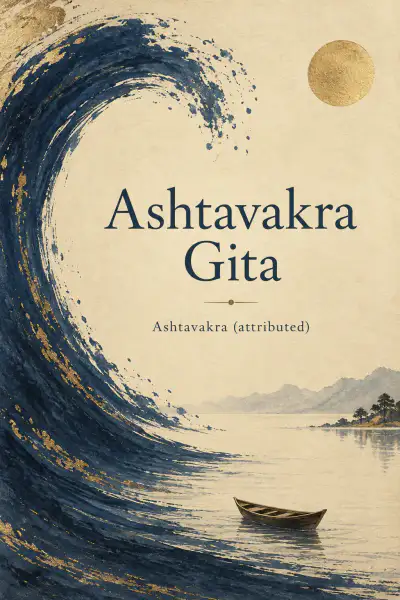
Hinduism · c. 5th century BCE (attributed)
Ashtavakra Gita
A dialogue between the sage Ashtavakra and King Janaka on non-dual Advaita Vedanta — considered by many to be the most concentrated expression of Advaita teaching in Hindu literature.
Translated by John Richards (1994, public domain)
20 chaptersAbout 36 minFree to read, no account

In the app
- About 1 hr 3 min of narration
- 23 illustrated Readings from this book
- 1 lesson cites this book, including Suffering
- 91 commentary notes
- Ask the Guide about what you’re reading
Membership includes narration, illustrated Readings, lessons, the Guide and full commentary. Individual lessons can also be bought to keep. Every book is free to read.
Read in the appContents
20 chapters20 chapters · Page 1 of 1
- 1Chapter 1: Instruction on Self-Knowledge
- 2Chapter 2: Joy of Self-Realization
- 3Chapter 3: Wisdom of the Self
- 4Chapter 4: Glory of the Realized
- 5Chapter 5: Four Ways of Dissolution
- 6Chapter 6: Higher Knowledge
- 7Chapter 7: Nature of Tranquil Wisdom
- 8Chapter 8: Bondage and Liberation
- 9Chapter 9: Detachment
- 10Chapter 10: Dispassion
- 11Chapter 11: Wisdom
- 12Chapter 12: Abiding in the Self
- 13Chapter 13: Happiness
- 14Chapter 14: Serenity
- 15Chapter 15: Knowledge of Truth
- 16Chapter 16: Special Instruction
- 17Chapter 17: The Liberated Sage
- 18Chapter 18: Peace
- 19Chapter 19: Self-Knowledge
- 20Chapter 20: Liberation in Life