The library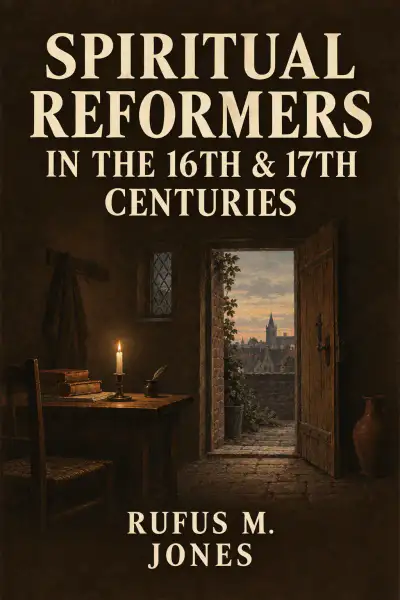
Mysticism · 1914
Spiritual Reformers in the 16th & 17th Centuries
Rufus Jones on the mystical 'spiritual reformers' — Boehme, Franck, Schwenckfeld, and their kin.
19 chaptersAbout 10 hr 13 minFree to read, no account

In the app
- About 15 hr 29 min of narration
- 149 commentary notes
- Ask the Guide about what you’re reading
Membership includes narration, illustrated Readings, lessons, the Guide and full commentary. Individual lessons can also be bought to keep. Every book is free to read.
Read in the appContents
19 chapters19 chapters · Page 1 of 1
- 1Introduction: What is "Spiritual Religion"
- 2Chapter I: The Main Current of the Reformation
- 3Chapter II: Hans Denck and the Inward Word
- 4Chapter III: Two Prophets of the Inward Word: Bünderlin and Entfelder
- 5Chapter IV: Sebastian Franck: An Apostle of Inward Religion
- 6Chapter V: Caspar Schwenckfeld and the Reformation of the "Middle Way"
- 7Chapter VI: Sebastian Castellio: A Forgotten Prophet
- 8Chapter VII: Coornhert and the Collegiants—A Movement for Spiritual Religion in Holland
- 9Chapter VIII: Valentine Weigel and Nature Mysticism
- 10Chapter IX: Jacob Boehme: His Life and Spirit
- 11Chapter X: Boehme's Universe
- 12Chapter XI: Jacob Boehme's "Way of Salvation"
- 13Chapter XII: Jacob Boehme's Influence in England
- 14Chapter XIII: Early English Interpreters of Spiritual Religion: John Everard, Giles Randall, and Others
- 15Chapter XIV: Spiritual Religion in High Places—Rous, Vane, and Sterry
- 16Chapter XV: Benjamin Whichcote, the First of the "Latitude-Men"
- 17Chapter XVI: John Smith, Platonist—"An Interpreter of the Spirit"
- 18Chapter XVII: Thomas Traherne and the Spiritual Poets of the Seventeenth Century
- 19Chapter XVIII: Conclusion