The library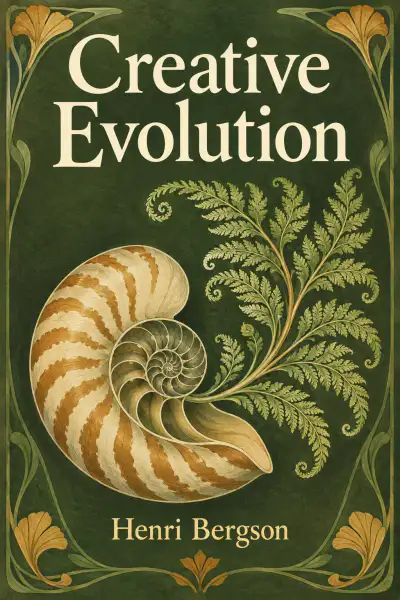
Mysticism · 1907
Creative Evolution
Bergson's central work — the universe seen as a single sustained creative becoming, the élan vital flowing through all life, and the limits of mechanistic and finalistic thinking when it tries to grasp this continuous welling-up of novelty.
Translated by Arthur Mitchell (1911)
50 chaptersAbout 8 hr 43 minFree to read, no account

In the app
- 249 commentary notes
- Ask the Guide about what you’re reading
Membership includes narration, illustrated Readings, lessons, the Guide and full commentary. Individual lessons can also be bought to keep. Every book is free to read.
Read in the appContents
50 chapters50 chapters · Page 1 of 1
- 1I · Of Duration in General
- 2I · Unorganized Bodies and Abstract Time
- 3I · Organized Bodies and Real Duration
- 4I · Of Transformism
- 5I · Mechanism and the Whole of Life
- 6I · Radical Finalism
- 7I · Beyond Mechanism and Finalism
- 8I · The Quest of a Criterion
- 9I · The Eye: Darwin and De Vries
- 10I · Identical Organs by Different Means
- 11I · Neo-Lamarckism and Orthogenesis
- 12I · The Vital Impetus
- 13I · Footnotes
- 14II · The Evolutionary Process and Adaptation
- 15II · The Animal and the Plant
- 16II · Torpor, Intelligence, and Instinct
- 17II · Energy and the Nervous System
- 18II · The Divergent Lines of Animal Life
- 19II · Instinct and Intelligence
- 20II · Two Modes of Knowledge
- 21II · Intelligence and Inert Matter
- 22II · The Nature of Instinct
- 23II · Intuition, Consciousness, and the Place of Man
- 24II · Footnotes
- 25III · Knowledge and Life: The Method of Philosophy
- 26III · Beyond the Pure Intellect
- 27III · The Genesis of Matter and Space
- 28III · Geometry and Deduction
- 29III · Induction and Physical Laws
- 30III · Two Kinds of Order
- 31III · Order and the Idea of Disorder
- 32III · Tension and Extension
- 33III · Creation and the Genesis of Matter
- 34III · The Impetus of Life and Creation
- 35III · Consciousness, Mankind, and the Spirit
- 36III · Footnotes
- 37IV · The Idea of Nothing
- 38IV · Negation and Affirmation
- 39IV · The Illusion of the Void
- 40IV · Form and Becoming
- 41IV · The Cinematographical Method
- 42IV · Zeno's Arrow and the Eleatics
- 43IV · The Philosophy of Forms
- 44IV · Plato and Aristotle on Change
- 45IV · Becoming in Modern Science
- 46IV · Two Views of Time
- 47IV · Descartes, Spinoza, and Leibniz
- 48IV · The Criticism of Kant
- 49IV · The Evolutionism of Spencer
- 50Translator's Footnotes