The library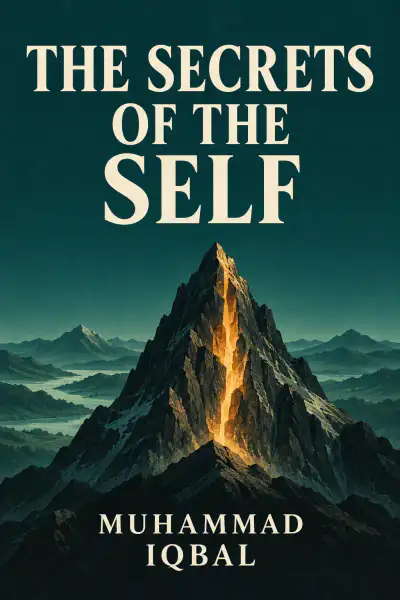
Islam · 1915 CE
The Secrets of the Self
Asrar-i-Khudi — Iqbal's philosophical poem on the strengthening of the self and the creative ego.
Translated by Reynold A. Nicholson
20 chaptersAbout 1 hr 28 minFree to read, no account

In the app
- 20 narrated chapters
- 40 commentary notes
- Ask the Guide about what you’re reading
Membership includes narration, illustrated Readings, lessons, the Guide and full commentary. Individual lessons can also be bought to keep. Every book is free to read.
Read in the appContents
20 chapters20 chapters · Page 1 of 1
- 1INTRODUCTION
- 2PROLOGUE
- 3Showing that the system of the universe originates in the Self, and that the continuation of the life of all individuals depends on strengthening the Self
- 4Showing that the life of the Self comes from forming desires and bringing them to birth
- 5Showing that the Self is strengthened by Love
- 6Showing that the Self is weakened by asking
- 7Showing that when the Self is strengthened by Love it gains dominion over the outward and inward forces of the universe
- 8A tale of which the moral is that negation of the Self is a doctrine invented by the subject races of mankind in order that by this means they may sap and weaken the character of their rulers
- 9To the effect that Plato, whose thought has deeply influenced the mysticism and literature of Islam, followed the sheep's doctrine, and that we must be on our guard against his theories
- 10Concerning the true nature of poetry and the reform of Islamic literature
- 11Showing that the education of the Self has three stages: Obedience, Self-control, and Divine Vicegerency
- 12Setting forth the inner meanings of the names of Ali
- 13Story of a young man of Merv who came to the saint Ali Hujwírí—God have mercy on him!—and complained that he was oppressed by his enemies
- 14Story of the bird that was faint with thirst
- 15Story of the diamond and the coal
- 16Story of the Sheikh and the Brahmin, followed by a conversation between Ganges and Himalaya to the effect that the continuation of social life depends on firm attachment to the characteristic traditions of the community
- 17Showing that the purpose of the Moslem's life is to exalt the Word of Allah, and that the Jihád (war against unbelievers), if it be prompted by land-hunger, is unlawful in the religion of Islam
- 18Precepts written for the Moslems of India by Mír Naját Nakshband, who is generally known as Bábá Sahrá’í
- 19Time is a sword
- 20An invocation